
- Home
- Engineering and R&D Section
Engineering and R&D Section
Fueled by DCLAD’s mission emphasizing continuous process improvement and operational excellence, the functions of Engineering and Research & Development lie at the core of our operations. We have experienced engineers dedicated full-time to developing innovative, reliable, and cost-effective solutions tailored to suit the most stringent corrosion resistance requirements.
Engineering Solutions
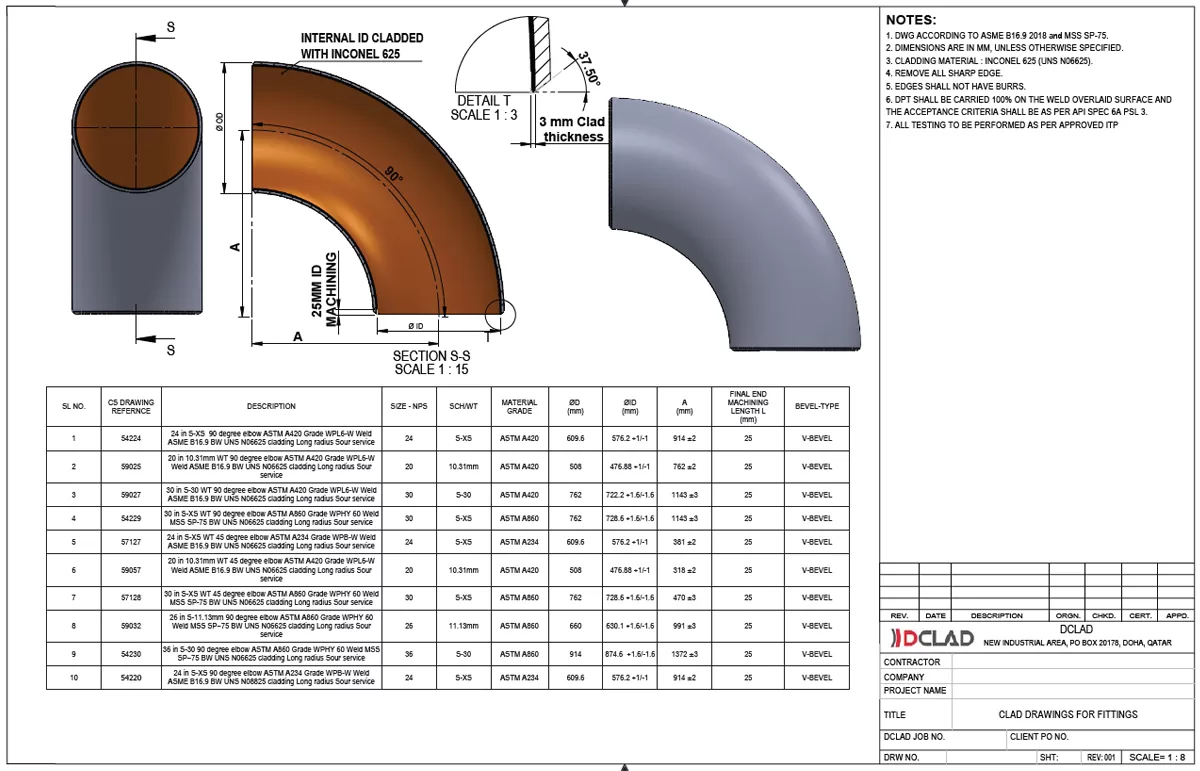
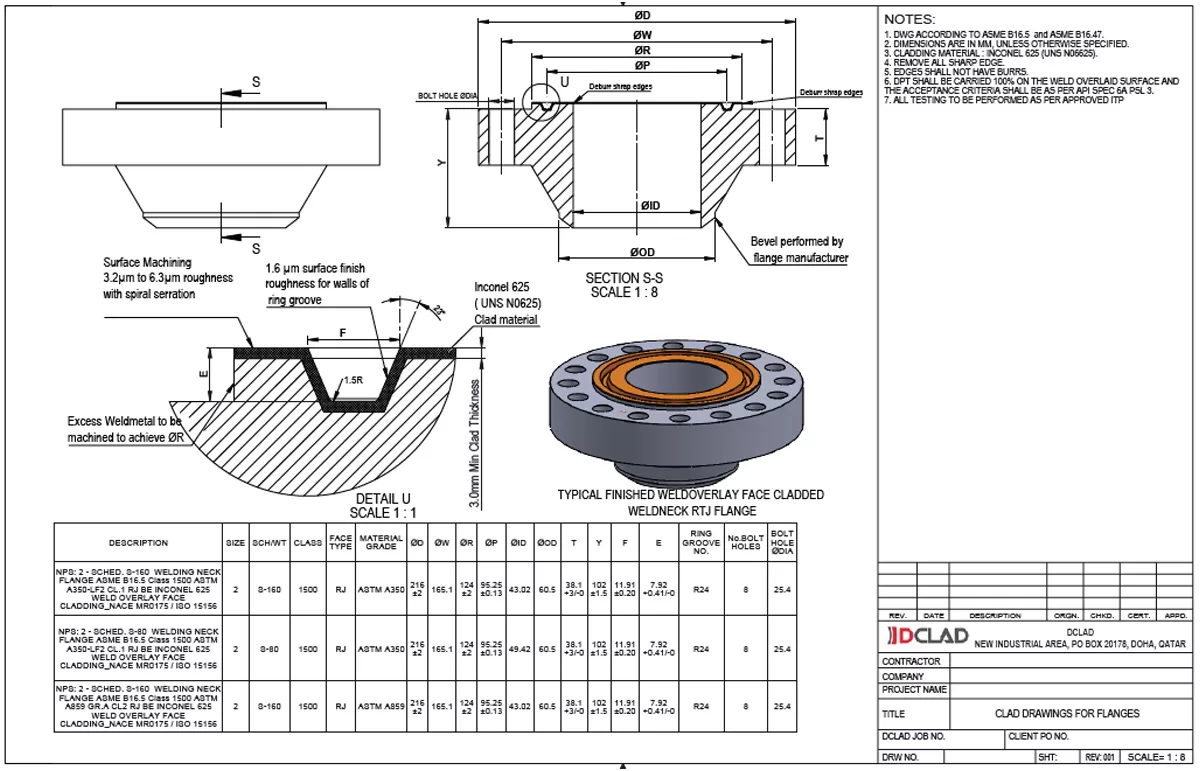
As a part of our customer service package, we design our weld overlay processes based on detailed analysis of component requirements, material properties, service conditions, and / or applicable client specifications and standards. Consequently, our team of experts ensures applying the most suitable cladding technique and if needed, provide technical recommendations on the alloy selection for every application.
We also guide our esteemed customers on the technical conditions and features to be considered in manufacturing the base materials, to ensure their suitability to the later weld overlay cladding process and its conformance to the target dimensional requirements as an end product.
Process Innovation
At DCLAD, we utilize automated weld overlay cladding systems in-built with the latest advanced technology, GTAW Pulsed Hot Wire, to achieve the optimum weld integrity of the lowest Fe% dilution (< 5%) and at higher production rates. Yet, we give great importance to R&D initiatives focused on continuous improvement of cladding techniques. Through automation and process control enhancements, we consistently improve weld quality, productivity, and cost-efficiency.
Metallurgical Expertise
We deploy welding engineers coming with rich experience in metallurgy and welding to support the development of weld overlay cladding procedures effectively and efficiently, customized to serve the specific and unique needs of our customers. In addition to that, we have a good database of pre-qualified cladding procedures suitable for a variety of service applications and are all qualified in accordance with the applicable industrial codes such as ASME and API.
Through heavy investments in prototyping and testing, we continuously conduct detailed metallurgical evaluations and analysis aimed at achieving optimal dilution control, bond integrity, and microstructural consistency.